
Blog
7 Critical Acrylic Factory Capacity Red Flags That Derail Small-Batch-to-Mass-Production Scaling

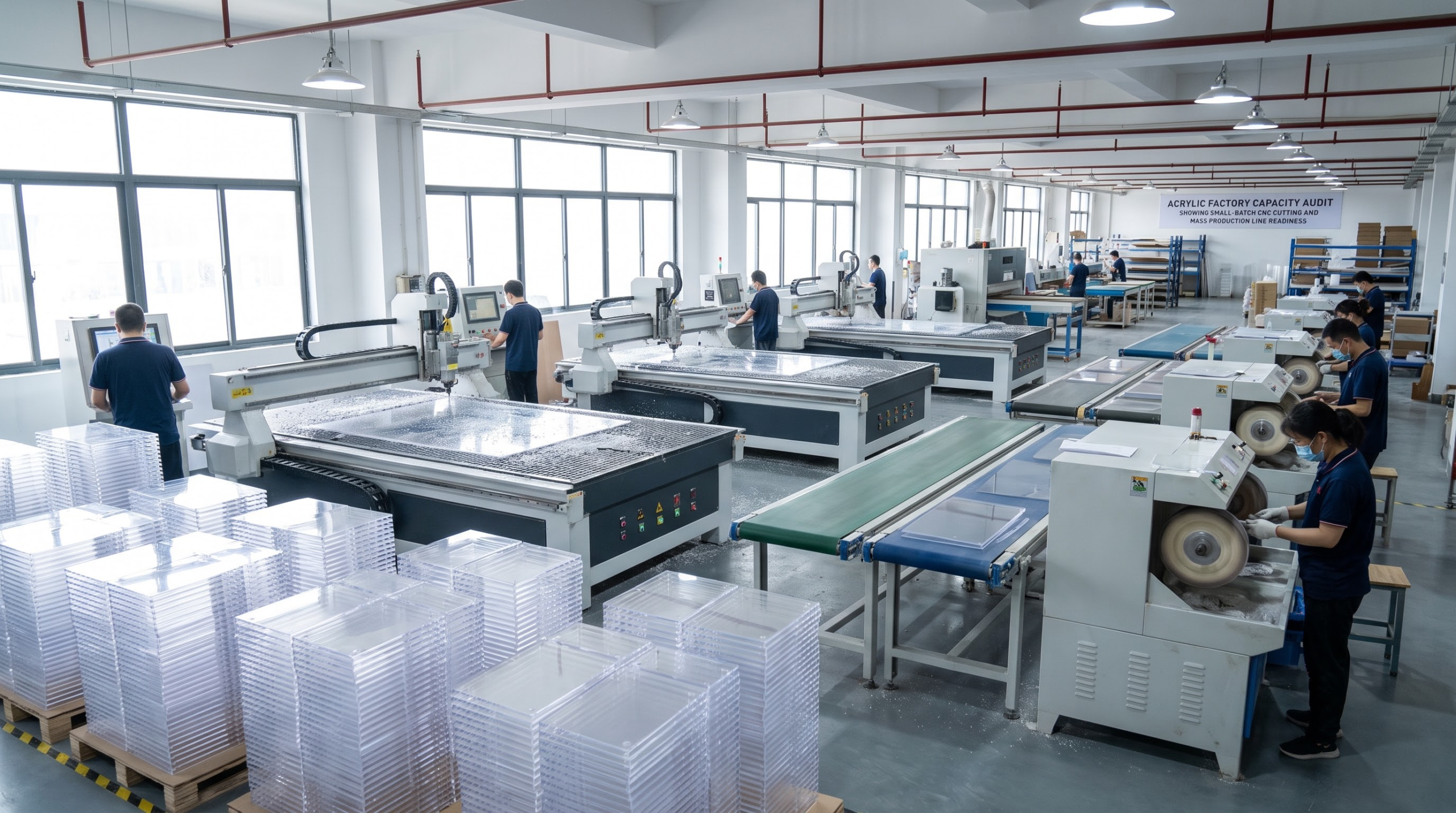
A single miscalculation in acrylic factory capacity can add 6–10 weeks to your production timeline and erase 12–15% of your project margin. Most buyers don’t fail on design—they fail because the factory that nailed 10 samples cannot handle 10,000 units. This guide shows you exactly which capacity signals to verify before you move from small-batch prototyping to mass production.
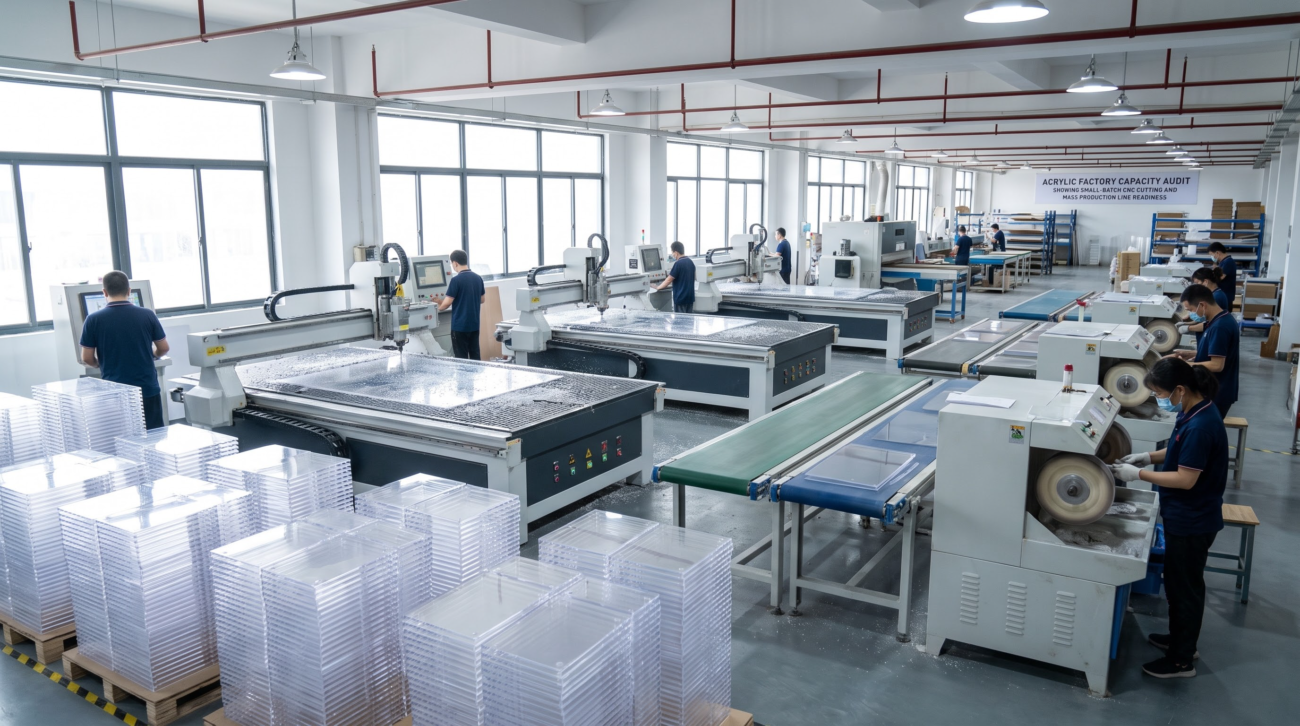
Why Acrylic Factory Capacity Controls More Than Lead Time
Capacity is not just about how many machines sit on the floor. It determines your true unit cost, quality consistency, and whether a supplier can absorb a rush order without breaking other clients’ schedules. Reliable manufacturers typically disclose machine hours, shift capacity, and raw material buffer stock before asking for a deposit.
1.The Hidden Cost of Underestimating Production Capacity
When a factory runs at over 85% capacity utilization, defect rates often climb because operators rush setups and skip secondary finishing steps. Industry audits show that acrylic suppliers with no documented capacity plan are 3x more likely to miss reorder deadlines. That turns a cheap sample into an expensive bottleneck.
2.Why Sampling Speed Is Not Production Capacity
A supplier can produce one perfect sample in 48 hours and still fail a 5,000-piece order. Sample rooms are optimized for speed; production lines are optimized for repeatability. To avoid costly chargebacks, ask whether the same machines, jigs, and operators that make your sample will also run your mass production batch.
7 Critical Acrylic Factory Capacity Red Flags to Audit Before Scaling
Use these seven checks in your next supplier conversation. If a factory cannot answer them in writing, walk away before you pay tooling costs.
1. They Show You a Sampling Room, Not a Production Line
Ask for a live video walkthrough of the actual production floor, not the showroom. Look for multiple CNC routers, laser cutters, edge polishing stations, and a clear workflow from cutting to assembly. A sampling-only workshop will choke when your order jumps from 50 units to 5,000 units.
2. The MOQ Shifts After Sampling
Hidden MOQ traps are the most common cause of budget overruns. Get a tiered MOQ table in writing: sample MOQ, pilot-run MOQ, and mass-production MOQ. Confirm whether the sample fee is refundable against bulk orders and whether that refund is a credit or a cash offset.
3. Fast Sample Lead Time Comes With a Vague Production Date
A 3-day sample means nothing if the mass production schedule is “around next month.” Ask for a capacity allocation plan with named machine hours and a committed production slot. Reliable manufacturers typically reserve a percentage of weekly capacity for repeat clients.
4. Rush Order Scheduling Is a Mystery
Rush orders fail when there is no dedicated buffer capacity. Ask: “If I confirm a 1,000-piece rush order on Monday, which machines and shifts run it?” The answer should include a rush slot policy, overtime rules, and a realistic premium—not a vague “we’ll try.”
5. Per-Unit Pricing Does Not Scale Transparently
Small-batch pricing is often loaded with setup and handling costs. Request a cost breakdown at 100 / 1,000 / 10,000 units so you can see where labor, material, and tooling costs fall. A factory with true mass-production capacity will show steep unit-cost reductions after setup is amortized.
6. Raw Material and Machine Capacity Data Are Missing
Long-term large orders require stable raw material supply. Ask how many tons of acrylic sheet the factory holds monthly and how many backup machines can switch to your product. If they cannot show machine-hour availability, your 90-day repeat order may wait behind other clients.
7. QC Staffing Stays Flat as Volume Rises
Quality collapses when the same two inspectors handle 10x the volume. Request the QC-to-operator ratio per shift and the number of inspection checkpoints for edge clarity, thickness tolerance, and surface scratches. A serious acrylic factory ties QC staffing to production volume.
How Flexible MOQ, Fast Sampling, and Rush Capacity Signal a Healthy Acrylic Supplier
The right acrylic factory capacity plan should make your procurement easier, not harder. These are the three commercial terms that separate production partners from sample shops.
Lock a Tiered MOQ and Refundable Sample Fee in the Contract
A flexible MOQ means the factory can profitably run 50, 500, or 5,000 units without retooling chaos. Ask for a written policy: sample fee deducted from the bulk order once volume reaches a defined threshold. This aligns the supplier’s interest with your scaling plan.
- Require a Named Rush Slot for Time-Sensitive Launches
Rush order capability is not “we’ll work overtime.” It is a reserved weekly capacity slot with a defined lead time and premium. Request a documented rush production SOP that lists machine priority, QC steps, and shipping cutoff times.
2. Verify Long-Term Supply Stability for Repeat Orders
Stable large-order supply depends on **raw material buffer stock, machine redundancy, and labor depth**. Ask for the factory’s monthly acrylic sheet consumption and whether they have at least **two lines** that can run your SKU. This protects you from a single-machine breakdown halting your entire order.
A 10-Point Acrylic Factory Capacity Scorecard for Supplier Audits
Use this scorecard during your next factory visit or video audit. Score each item from 1 to 5. A total below 40 is a red flag.
– Production floor has multiple CNC routers and laser cutters, not one demo machine.
– Supplier provides a live video walkthrough, not stock photos.
– Tiered MOQ is documented for sample, pilot, and mass production.
– Sample fee refund policy is written and tied to bulk order value.
– Mass production lead time is committed in days, not “soon.”
– Rush slot policy names specific machines, shifts, and premiums.
– Per-unit cost breakdown is available at 100 / 1,000 / 10,000 units.
– Raw material buffer stock is quantified in tons or sheets per month.
– QC staffing ratio scales with production volume.
– Backup machines or lines can run your SKU if primary equipment fails.
Conclusion: Audit Acrylic Factory Capacity Before You Pay for a Single Sample
The biggest supply chain risk is not a bad product—it is a factory that cannot scale with you. Three takeaways: first, verify production-floor capacity separately from sampling speed. Second, lock flexible MOQ, sample fee refunds, and rush slots into the contract before payment. Third, score every supplier against a written capacity checklist so you can compare them objectively.
Use this 10-point scorecard in your next supplier audit. If your current acrylic factory cannot answer all ten items, request a capacity review meeting or start sourcing a backup line now.