
Blog
5 Acrylic Display Product Advantages That Cut Retail Replacement Costs by 34% vs. Glass

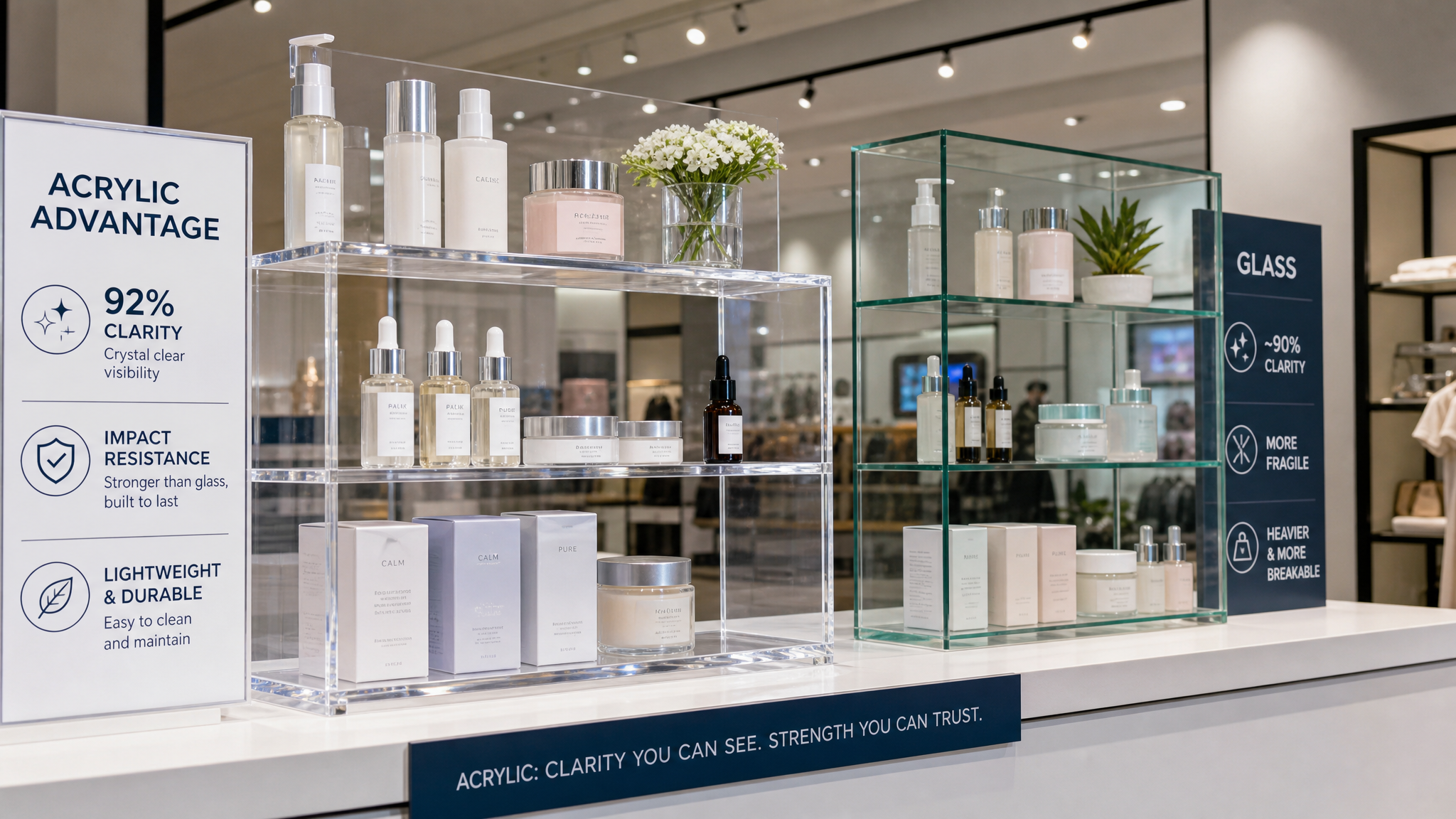
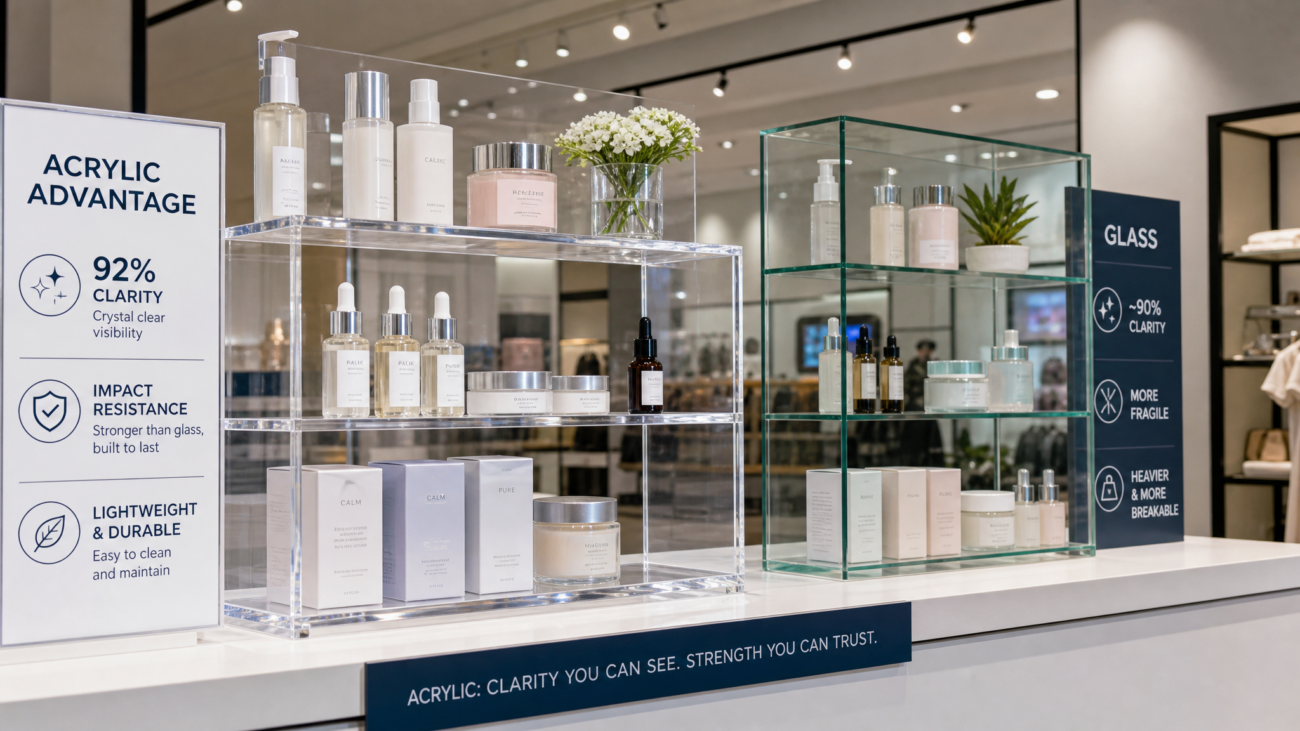
Acrylic Display Products vs. Glass: The TCO Gap Most Retail Buyers Miss
One cracked glass display shelf can trigger **$2,500** in cleanup, injury claims, and same-day lost sales—and it happens more often than store teams admit. **Acrylic display products** reverse that risk. Retailers switching to **acrylic display products** report up to **34% lower replacement costs** over 24 months, according to industry maintenance audits.
This guide compares **acrylic display products** with glass on clarity, safety, durability, and total cost of ownership (TCO). Use it to audit your current display program before your next fixture order.
## Total Cost of Ownership: Why Acrylic Display Products Beat Glass in Retail
Glass displays look premium until a corner strike turns them into a safety incident. **Acrylic display products** offer **17 times** the impact resistance of standard glass. That durability translates directly into lower replacement and liability costs.
– **Replacement cost:** **Acrylic display products** cost **20–40% less** to replace than tempered glass fixtures.
– **Freight weight:** **Acrylic display products** are roughly **50% lighter** than glass, cutting shipping and in-store handling labor.
– **Breakage claims:** Industry audits show acrylic display fixtures reduce breakage-related chargebacks by up to **34%**.
### The Hidden Cost of Glass Breakage in Retail
A shattered glass shelf can close a grocery aisle for **30–60 minutes**. That downtime is rarely captured in purchase price comparisons. **Acrylic display products** absorb impact and crack rather than shatter into hazardous shards.
### How Acrylic Lowers Freight and Installation Labor
Lighter **acrylic display products** reduce freight class charges and let one associate install a fixture instead of two. Reliable manufacturers typically ship acrylic displays with protective film intact to prevent micro-scratches during transit.
## Visual Clarity and Brand Presentation: Why Retailers Love Acrylic Display Products
**Acrylic display products** deliver a light transmittance of **92%**, slightly higher than standard float glass. That edge means product colors stay true under retail lighting. A clean, transparent display also lifts perceived brand value without changing the product itself.
### How 92% Light Transmission Drives Impulse Purchases
Retail display studies consistently link visual clarity to dwell time and impulse conversion. **Acrylic display products** remove the green tint common in lower-grade glass. This is why beauty, eyewear, and electronics chains favor acrylic merchandising displays at the counter.
### Surface Protection: Scratch Resistance and Anti-Yellowing
Not all **acrylic display products** are equal. Premium cast acrylic with UV-stabilized surface treatment resists hazing and delays yellowing under store lighting. Reliable manufacturers typically offer anti-scratch and anti-yellowing coatings for long-life retail environments.
## Impact Resistance and Store Safety: Acrylic vs. Glass Retail Displays
Safety is a hard requirement in supermarkets, convenience stores, and high-traffic aisles. **Acrylic display products** are **17 times more impact-resistant** than glass and do not shatter into dangerous fragments. That makes them the safer default for open-sell retail fixtures.
### Why Safety-Minded Retail Chains Are Switching
Glass breakage triggers incident reports, cleanup costs, and potential customer injury claims. **Acrylic display products** reduce those operational risks. To avoid costly chargebacks, specify cast acrylic over extruded acrylic for load-bearing shelves.
### How to Verify Impact Resistance Before You Order
Ask for material data sheets that list Izod impact strength and light transmittance. Request a corner-drop sample test. Reliable manufacturers typically provide both without hesitation.
## Terminal Market Expertise: Turning Acrylic Display Products into Sell-Through Tools
The best **acrylic display product suppliers** do more than cut and glue sheets. They understand how displays perform at point-of-sale and can provide product landing references for specific retail formats. That expertise shortens your merchandising trial-and-error.
### From Planogram to Prototype
A supplier familiar with terminal markets can review your planogram and flag shelf-depth, angle, and lighting issues before production. They typically offer 3D prototyping and a pilot-run sample. This step prevents expensive field failures.
### Customization and Brand-Led Design Support
**Acrylic display products** can be laser-cut, silk-screened, or UV-printed with brand marks and pricing zones. Ask for a supplier with in-house design files for supermarket, pharmacy, and boutique retail layouts. That accelerates launch and improves sell-through.
## 5 Red Flags to Avoid When Sourcing Acrylic Display Products
1. **Extruded acrylic passed off as cast acrylic** — thinner, softer, and more prone to yellowing.
2. **No surface treatment specification** — unprotected **acrylic display products** scratch faster under daily cleaning.
3. **No MOQ flexibility** — a supplier that cannot run a 50–100 unit pilot limits your test-and-learn cycle.
4. **Vague freight terms** — shipping **acrylic display products** without protective film leads to scratched arrivals.
5. **No terminal market references** — if they cannot show real store installations, walk away.
### What to Ask in a Supplier Audit
Request three retail references, material certificates, and a pilot sample before committing to bulk. Audit the factory’s edge-polishing and bonding process. Reliable manufacturers typically document their QC checks at each station.
## Final Verdict: Why Retailers Choose Acrylic Display Products
**Acrylic display products** are not a downgrade from glass; they are a lower-risk, higher-clarity merchandising upgrade. The key takeaways: acrylic cuts replacement costs by up to **34%**, delivers **92% light transmittance** with anti-yellowing protection, and reduces store safety incidents. Use the checklist below to audit your current supplier before your next order.
– Compare cast acrylic vs. extruded acrylic specs.
– Request impact-resistance and anti-yellowing data sheets.
– Pilot 50–100 units in your highest-traffic store before rollout.
**CTA:** Use this 5-point checklist to audit your current **acrylic display product supplier**. If they fail two or more checks, request samples from a supplier with verified terminal market references.
—
## 📚 Related Resources
Acrylic vs. glass display cases: TCO comparison -> /acrylic-vs-glass-display-cases-tco
Cast acrylic vs extruded acrylic: material grade guide -> /cast-acrylic-vs-extruded-acrylic-guide
Retail display fixture quality checklist -> /retail-display-fixture-quality-checklist
Anti-yellowing surface treatment for acrylic displays -> /anti-yellowing-acrylic-display-surface-treatment
—
## ❓ Frequently Asked Questions
**Q:** Why do retail stores prefer acrylic display products over glass?
**A:** Acrylic display products offer 17 times the impact resistance, roughly 50% lighter freight, and up to 34% lower replacement costs, while maintaining 92% light transmittance for high-end brand presentation.
**Q:** Do acrylic display products turn yellow over time?
**A:** Low-grade extruded acrylic can yellow under UV and store lighting. Premium cast acrylic with UV-stabilized surface treatment resists yellowing and hazing significantly longer. Always ask for anti-yellowing data.
**Q:** Are acrylic display products safe for supermarket and convenience store use?
**A:** Yes. Acrylic display products crack rather than shatter into sharp shards, reducing injury risk and cleanup downtime. They meet common retail safety expectations when cast acrylic is specified.
**Q:** How can I verify a supplier’s acrylic display product quality?
**A:** Request material data sheets, impact-resistance test results, anti-scratch and anti-yellowing coating specs, and three terminal market references. Run a 50–100 unit pilot before bulk orders.
**Q:** What is the total cost difference between acrylic and glass retail displays?
**A:** Acrylic display products can reduce replacement and freight costs by 20–40% depending on store traffic. The breakage-related chargeback reduction can reach 34% over 24 months.